

Diagnosis Drawing
The devil is in the detail

One odd advantage of reading old works is that you can see how they depict various illnesses.
Say, a Victorian work depicting an insane woman crawling about and growling -- like a wild animal.
Which meant the writer had read the very best medical texts of the day dealing with insanity. Acting like an animal was part and parcel of the regression of insanity.
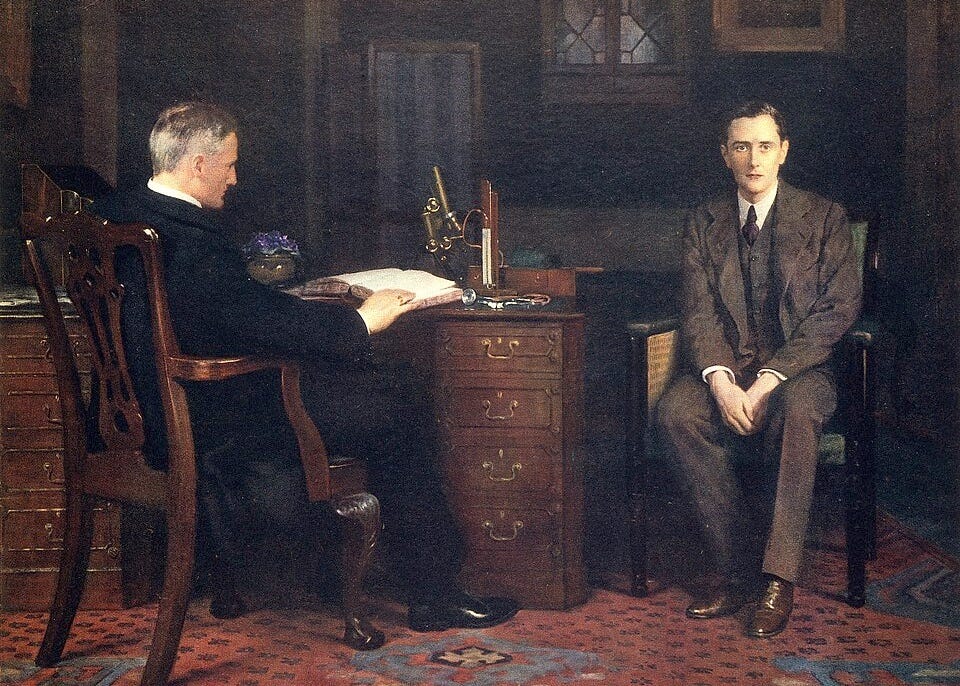
Our medical texts have improved, but it’s unlikely they have improved to perfection.
On the other hand there is the Father Brown story, “The Honour of Israel Gow,” of which I have heard sober discussions of whether Israel Gow is autistic. He’s not described as such in the text, where they talk about how he’s said to be half-witted and deaf, and could not have been described as autist, since in G.K. Chesterton’s day, only the severest cases were autism. A character who gets about and makes his own living was not autistic.
Still, a list of his symptoms describes such things as his obsessions, which is why there can be discussion.
Further back, William Shakespeare lived in a day when the medical texts were even less valuable. (One describes witches as being negligent for not considering the astrological side of health.) Nevertheless, in Henry IV, Part 1, Lady Hotspur laments how Hotspur has treated her since his return from battle, and the list of complaints is a symptom list for Post-Traumatic Stress Disorder.
Since neither writer could have drawn the descriptions from medical texts,1 one presumes they drew them from real life.
This is still useful advice. For one thing, the generalized picture in a book (or a webpage) may not indicate which symptoms typically appear together, or even make it appear that all the patients evince them all.
True, some diseases generally present with the same set of symptoms, but there can be anomalies. And many diseases can be more hit-and-miss with symptoms.
This is why drawing from a real-life singular case, either directly or through someone who knows one -- and has the expertise to describe it accurately, gossip being as accurate in case of disease as in anything else -- can be a great aid to get it right.