
Series And Backstory
Another way to end a series you don't want to end

There’s a temptation in a series, if you work with a character of mysterious origins.
You do not absolutely require a character of mysterious origins, but it’s a far graver temptation if you do.
It is a particular danger if you emphasize that he’s of mysterious origins.
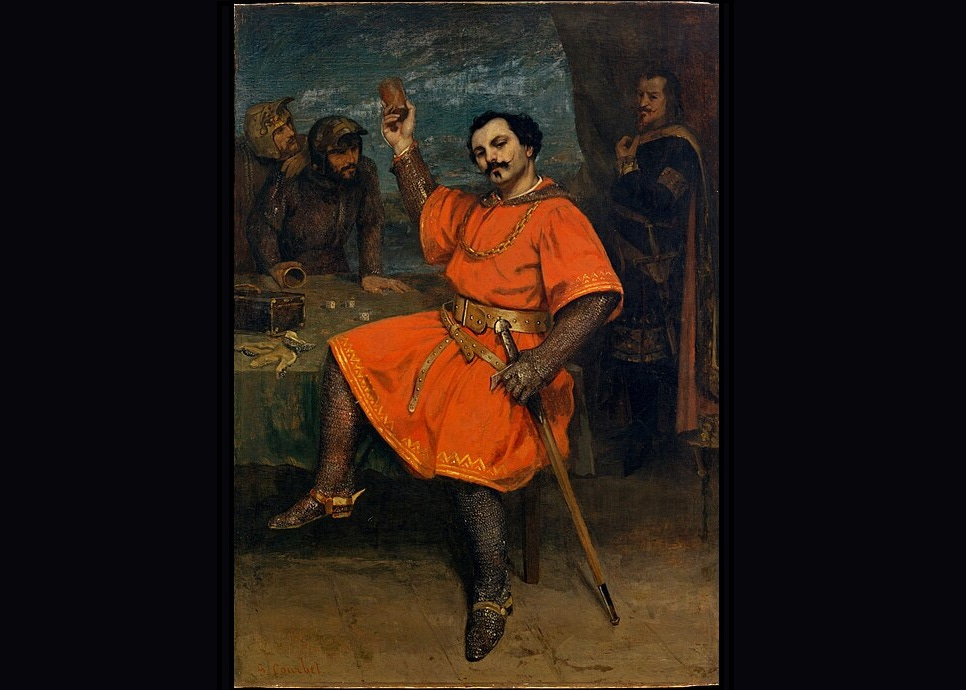
Let your wandering minstrel travel through the mountains, stopping at villages to play his tunes and hear any tales of wicked witches, vicious werewolves, or dangerous ghosts, and dispel the evil if it proves true.
If everyone treats the matter of a minstrel as a matter of fact -- there are minstrels, they do wander -- there’s less danger.
But if they start to whisper to each other than he’s a nobleman hunting down the werewolf that killed the king, or a heart-broken lover of a ghost whom he had to dispel, the peril looms.
Partly because readers regard this as a Chekhov’s Gun, which you must fire at some point. Especially the werewolf that killed the king, which is a series ending matter.
Partly because you can deepen the stakes for the character by making it personal. You do not actually have to be so blatant as to force him to face another ghost very like his beloved. Perhaps a werewolf that escaped his first fight with it, perhaps a giant that tricked him into being on the other side of a river and then tore down the bridge -- anything from the past that adds a pang to the story.
Partly because that, in itself, is an aesthetic win for the story, it may make the next story flat if it’s just the current day. Thus, the life may be drained from the series.
But you don’t, you may think. Keep on making it personal.
Ah, but then time questions come up. And coherence issues.
Have you given the character more backstory than he has life to have lived it in? And have you kept that backstory straight?
Keeping it straight can come into play for any sort of backstory, but is particularly keen when dealing with origins, which have to be limited in time and place. You can only have one experience that made you a wandering minstrel to fight monsters, even if you have many that keep you going.
This is far more of an issue when many writers works on a theme. Even in the Matter of Britain, you end up with the wholly human Morgan le Fay. The comic-book universes shows the full horror though, with conflicting visions on top of the endless need to churn out stories.
Especially given that a writer can’t just ignore that story told him before him. If he wishes to clean it up, he would have to tell a story to explain it away, and such stories are notoriously weak. (After a time, writers may ignore it, but that introduces contradictions.)
Granted, some characters can manage a welter of back-stories because it is clear that none of them have sufficient evidence to be established as truth, but that has to fit the character. A madcap peddler who keeps selling the party things that help, but only after greatly embarrassing them, or some other trickster.
You have to remember to keep them in suspension.
And if you have another writer working on the world, you may find it taken out of your hands. The problem of shared worlds.
Also remember that readers often take rumors as fact. The unsubtle use of them to dump knowledge is, alas, a known trope, and it takes skill to convince readers that the rumors are rumors.
Contradictions help, but you obviously can not use the technique of introducing rumors that the readers know are wrong, because the point of these character is that their background is not known.
One notes that doling out the contradictions over the series is more likely to convince readers that you are contradicting yourself than that the rumors are wild. At least the first time, several impossible rumors should be given.
Such is the burden of keeping the backstory from dragging down the series to its end.