

Threads And Scenes
The art of juxtaposition

When juggling your threads1 in your story, one thing to keep an eye on is the scenes.
Ideally, of course, a scene would advance all the threads. It is rare, however, for one situation to advance the political struggles among the characters, the romantic situation, developing friendships, and the main character’s quest for the knowledge of the grave evil developing.
Be wary of putting two scenes in a sequence that deal only with one thread.
Or at least realize that this is going to move that thread forward in importance, and push the others toward subplot status.
You may want that. The main character may come to realize that the evil wizard he’s worried about, the friends he makes, the woman he wishes to marry, will all have trivial effect on the kingdom next to the machinations of the powerful nobles, and throw all his weight into averting a bad decision.
Or, conversely, push the machinations into a background nuisance, while he draws his friends and beloved into the great task of stopping the wizard
But they could all be important. The main character has to make friends and allies to help with the fight against the evil wizard, particularly because nobles continually interfere, as they regard their petty squabbles as more important. The final defeat is bringing down the evil wizard, and doing in a way that gives his friends and beloved the honor due them, and shames all the great nobles for their failure.
In that case, you want to consider mixing and matching. In particular, because scenes in the same thread often have the same sort of mood and tone, and you want variation.
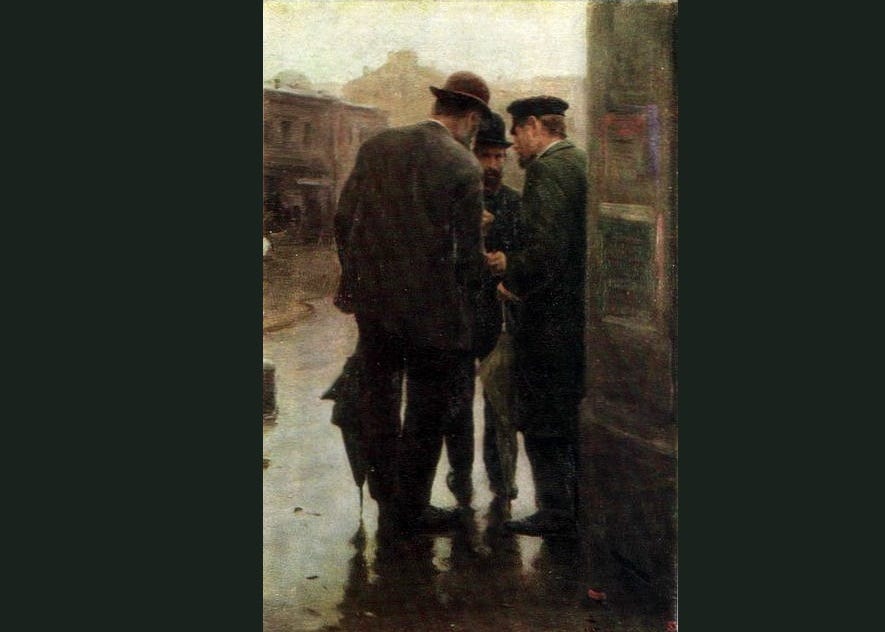
A merry, false, and frivolous gathering, glittering with jewelry in the greenhouse laden with exotic plants, lets the main character face the nobles and make a good showing, to avoid their gossip, and also lets his friend whisper to him that they have found out more. This makes a nice contrast with the huddled gathering, on the street in the rain, everyone attired in dark, drab attire like minor clerks, where they pass on the knowledge and plot their next step.
The more the scenes have in common, the more important it is to mix them up. A scene in a shop where the main character has to buy a hat and encounters a snobbish character ready to gossip about his purchase does not do much harm being juxtaposed to a scene at a glittering ball -- provided, of course, that the dialog doesn’t echo too strongly. Continuity can make them work better, by making them seem more of a unit, so that if the gossip at the ball is about that hat, showing how quickly the rumors spread.
Two encounters in shops, even if the second one has snide comments about his first purchase, are less elegant when juxtaposed. Unless showing how quickly the consequences of a scene play out is important, it is wise to space the scenes out.
If you have nothing that should go between them, consider gravely whether you have something that should go somewhere, but the position is not critical, so you can slap it in here.
You could, of course, use scenes to advance other important things, such as characterization and setting. A scene where the main character and his beloved go to an exhibition can break things up even as it shows the world and the characters, even if it does not advance the love story. (Though, of course, you do have to be wary of planting Chekhov’s Guns in there, even if it could also be a pleasant surprise.) 2
Consider even more gravely whether the other threads have actually stopped in this time. You might even get a scene out of that, as the friends gather and grouse that the evil wizard has gone to earth, and unless he is buying truly unusual things for his evil plots, he isn’t even shopping. It would make an ironic counterpoint to the shop visits, at that, but the important thing is that they have not forgotten their problem while they wait.3
It is, after all, important not to let a plot thread go missing for too long. It throws off the story structure.
When a scene does serve to forward several plot threads, it gives you more freedom to continue them because the other threads also weighed in. On the other hand, since such scenes do tend to be longer than single purpose scenes, it also means that any thread not addressed it is in more danger of falling behind.
It may be something unwise to consider the scene balance too strongly in the heat of composition. Revision4 and a cold, clear eye may be better to move the scenes about, or add or subtract, as needed -- all the more in that you have the story in hand and know what else is needed. Nothing is nicer than realizing that you can split up two scenes with a conversation that sets up a plot device.
On the other hand, the less you consider it in the first draft, the more likely it is to form a major issue when revising.
Such are the trade-offs of writing.

Is That A Gun In His Hand?

Sometimes you plop the gun on the mantelpiece with malice aforethought, to warn the reader that it will be fired.

How Did That Get In There?

Ah, revision. You finish your first draft. Sagely, you put it aside and let it stew on the back burner. Perhaps you give it a week, or longer. Perhaps when you pull it off for the second draft, you change the font, or the color of the font, in order to give yourself a chance to read what you wrote instead of what you imagined you wrote.
> The main character has to make friends and allies to help with the fight against the evil wizard, particularly because nobles continually interfere, as they regard their petty squabbles as more important.
Or maybe the squabbles aren't so petty and one of the noble factions is secretly in league with the evil wizard.
A good example I've seen of how to juggle plot threads and subplots is in the Judge Dee novels by Richard Van Gulik. They're police procedurals set in 7th century AD T'ang China with showing how Confucian magistrate Judge Dee solves crimes and baffling mysteries in whatever city he's currently stationed in. The Judge usually ends up dealing with three different mysteries, that sometimes get tangled together and sometimes are completely separate. He often also finds the time to have other subplots. Like in 'The Haunted Monastery' where he unintentionally ends up playing matchmaker for two young couples.