
A Problem With Portals
Convincing the reader

The thing I’ve found about portal stories, as opposed to high fantasies, is that they make the fantasy world seem less real. More artificial. Less dangerous, as a consequence, with lower stakes because both what is imperiled and the peril are less genuine.
Sometimes you want that for a light-hearted fantasy. Particularly a children’s book, which may help explain why so many portal fantasies are children’s book. Still, you may want a portal fantasy where the world on the other side is realistic and carries weight, and portal fantasies are less good at that.
On the whole, on average. The use of the same sort of tropes in a high fantasy does tend to import the same sort of problems. In particular, the Chosen One.
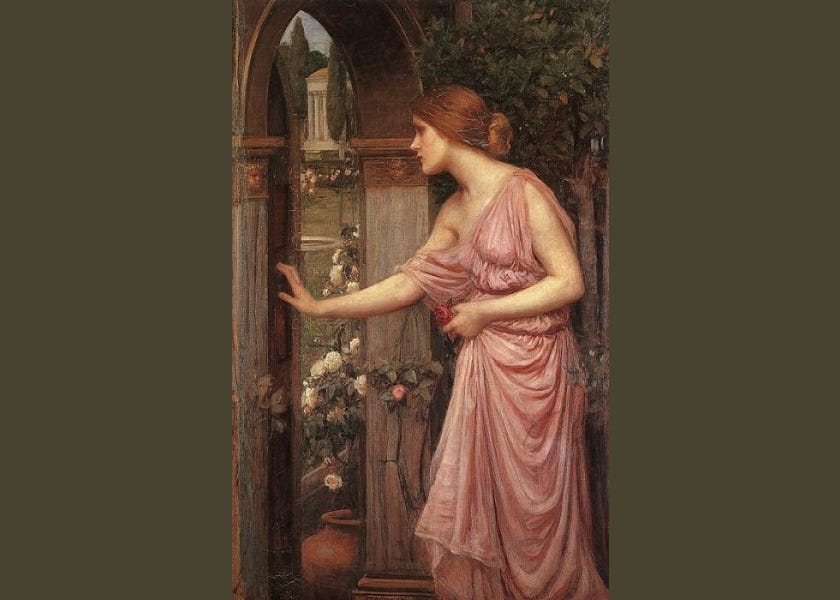
Obviously if you send out a magic spell to grab a person and drop him into a land to deliver it from an evil, the land and the character have to fit together neatly. Very neatly indeed.
This creates the impression that the land has been made for the character, as in as tidy a manner as any of the Victorian fantasy lands created solely for the edification of the child who is dropped in it. Even if the character arc is to stop being so self-centered.
There are isekai where the character seems comically misfit for the situation, but then, the character turns out to fit after all. What, after all, are you going to do? Drop the character in, and have the disaster happen anyway? That’s no fun.
Still, the feeling of being contrived undermines the reality of the other world. Among other things contributing to the unreality.
In one respect, the isekai where many people are thrown into a Gamelit world handles it more graciously, except that the story, naturally, follows the one with the most effect on the world.
But if an isekai is to feel as real as the best high fantasy works, work must be done.
Something could be done with lowering the stakes, perhaps. A certain school of evil sorcerers has devised a magic that no one in the world can counter. A wise wizard devised a magic to summon a person who can fight it -- and whose situation in his own world is such that he will not be missed, except perhaps by the evil characters. These sorcerers do not have to be powerful. Perhaps one cursed seven children for laughing at him, and the newly summoned hero needs only to master the magics to heal them. And find a new place in his new world.
Who knows? Perhaps the wizard casts the spell, and if it works, the summoned person has to figure out what the problem is. One thing that contributes to the “fit together” situation is that the character usually lands where the problem is known, and he is known to be the solution, but perhaps more important, the quest to figure out the problem gives the tale a chance to show the world, and make it look real and convincing -- and worth fighting for.1
Trickling out history also helps. A world that can deliver its history in one chunk is a problem, even if one character is clearly motivated to tell it, and another to listen. Tracking over the world helps there.
One thing to be very wary of is the Gamelit situation. If the characters gain classes, and see their stats, and other things, it’s very hard to be convincing. I won’t say it’s impossible, because Kit Sun Cheah pulled it off in Dungeon Samurai. On the other hand, he both limited the number of stats -- if you can’t pack the stats in the size of a paragraph you have too many; pages and pages are right out -- and, more importantly, gave a reason for it that fit into the world-building. (It does get revealed rather deep in the story, to be sure. On the other hand, it was clearly built in, and illuminates events before.)
A way to increase the effect would be to make the change less intentional. There are gates, stairways, portals, that lead from one world to another. Pass through, even if you just followed some strangers out of curiosity, and you are in a new world. There would probably be something to make them one way -- perhaps a labyrinth to bewilder the path, perhaps something so simple as a door that locks behind you, perhaps something to escape on the other side -- though some characters might just want to stay.
A fixed portal might even have an order with its monastery standing by. Among their other duties is taking in those who stumble through, orienting them, and sending them out into the world to forge a new life.
There is nothing like making the character one of many to stumble through to curb the effect of the world’s seeming as if made for them.
Thank you for this article. I tend to see things a bit differently. There is that old Roman god Ianus who looks this way and that in time and space, being a transcendental portal himself. And in Italy the idea doesn't seem to be unknown that portals open to places of the strange and fantastic: the "Horti di Giano Edizioni" in Rome offer ... the fantastic. Thank you.
In my WIP, portals are dangerous, especially for inexperienced magic workers against highly experienced magic workers and strong wards.