
Experience In The Dungeons
Can this trope be justified?

Off the characters go, into the depths of the dungeon, clearing it level by level. And going up in level each time.
As a consequence, they rise from easily killed weaklings to beings of extraordinary, if not god-like, powers. (All right, god-like chiefly if the Game Master wimps out on the gods. But many GMs do.)
Can this work in a story?
Besides, of course, a GameLit story where the hero is thrown into the world and told it works like a game, or where he grows up in it, and the mechanics of it have always been the way the world worked. Where a thief can cheerfully explain to a wizard that the real trick to improving is adventuring -- she went on an adventure, and her lock-picking improved even though she hadn’t picked a single lock on the trip.
But can it work in a fantasy world?
One notes it is very unlike myths and legends, or fairy tales either, for that matter. Hercules does not grow in strength in his labors, only in fame. Indeed, even in his cradle, he was strong enough to strangle venomous snakes sent to kill him.
When legendary characters grow in power, it’s usually because they have been handed a sword, an invisibility helmet, a winged horse -- a means of being more powerful.
Then, fantasy can differ from legend.
So, this might work in a fantasy world, but one thing that’s impossible is to conceal it entirely. Perhaps well enough that a reader unfamiliar with RPGs can read it and think it a quirk of the world, perhaps even a charming or dramatic quirk, but you can not conceal it so well that a person familiar with RPGs will not notice that it’s leveling up.
One hopes it serves some plot purposes in your story, to justify the kludge.
The Powers That Be have decreed it? That those who fight monsters shall be rewarded with the power to fight monsters? That fighting magical beings causes the “mana” to flow free and empower you? While the explanation does have the advantage of brevity, it doesn’t do much to disguise the plot device. Even if you invoke the gods, the readers know that the gods do what you decree.
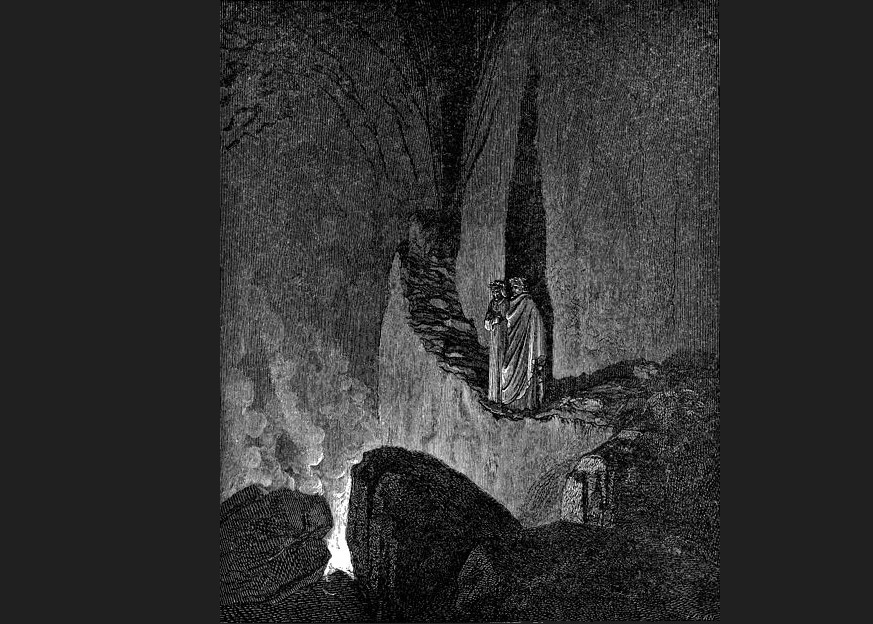
For a more detailed reason, there’s always the old “Dungeon as Mythic Underworld.” This goes back to the early days of D&D, when all adventures were deemed to occur in underground dungeons. And not just because the underground was where the DM put the monsters.
It was another world.
All the monsters could see in the dark, and your characters needed light sources. Indeed, monsters that started to work for the characters needed light sources.
All the doors had to be unlocked and sometimes forced open for the characters. They would spontaneously shut after them unless spiked open, and even then the spikes might “slip.”
On the other hand, doors, unless spiked shut, would open spontaneously for the monsters.
Wandering monsters could find you despite that type of monster having no lairs in the dungeon, or your party having cleaned out their lair. Indeed, they could lair -- or wander -- without doors large enough for them to pass though. The dungeon contains no visible ecology.
Gold and curses and magical objects abound. Perhaps that explains why the rules to make magical objects are so ill-defined: the dungeon spontaneously makes them as a lure. It fits such a region, and its odd nature.
Uncanny nature, in fact. Eerie. Unearthly. Liminal. Possibly without limits in either space or time, having no known origin or purpose, changing in form over time, non-linear, even non-Euclidean.1
Not all underground adventures have to happen in such an underworld, and not all such “underworlds” have to be underground, though the need for paths and barriers limit the possibilities. Still, you can put them in a forest, an enormous edifice -- a rocky desert provided the formations can’t easily be surmounted.
Then you have it. The sort of place where odd things happen. Having passed through so liminal a place, it would not be out of the ordinary for the characters to pick up some numinous aspects of it for themselves. To grow in power, toward that of legends, would be one element of it.
In a game this can be a bit of flavor, or even utterly ignored as the justification the GM and players don’t care about. It can even be an excuse for jovial, free-wheeling, random dungeons of the true old school.
In a story, however, getting readers to care means taking the dungeon seriously, and building up the mythic and uncanny aspects as something felt as well as a plot device allowing for free-wheeling adventures. If the risk of death is real, the characters have to treat it as serious if the story is not to be absurd.
But it does give a fictional reason for experience and leveling. One does note that all the adventures have to be in such mythic zones, or that the other ones can’t grant experience. That, in itself, would require a lot of juggling in a story. But it would be epic if you could pull it off.