
Sequel Hooks
Setting up sequel stories

A different kind of hook. One you can hang things on. Namely, sequels.
This is not for the sequel that is actually just the next volume, because the story sprawls over several books. There, you just need the dramatic cliff-hanger to draw the readers on to the next book.
No, when you are doing episodic tales,1 so that resolution rounds out this tale, but you want to do another. Or realize you might. (Depends on the genre, of course. Mysteries do not need sequel hooks. Fantasy and other adventure tales often do. Depends on how final the resolutions are.)
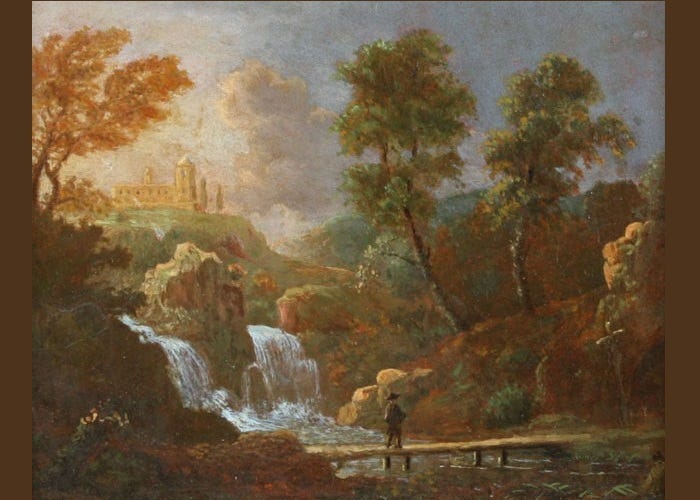
What you need is horizons and vistas. Suggestions that the world is larger than this tale.
This requires a delicate touch. You can not suggest that they are important in the story, or the reader will expect something to be made of them. This is particularly important when the thing is a problem. It must counterbalance the awareness that something is wrong with the focus that it is not what the characters are dealing with, because they must fix this.
Furthermore, you must set them up in the middle.
If you bring down the Evil Wizard of Fire, mentioning in the denouement that he was one of seven evil overlords both damages the resolution and draws attention to the Sequel Hook! nature of it. Much better to mention the seven during the course of the story. Ideally, first mentioning the seven and then that this one is the problem, but the story, of course, has other demands.
Likewise, if the next story is to be about trying to restore the dragon’s looted hoard to its owners, after it ravaged half the kingdom, this gets mentioned in the course of the story of hunting down the dragon and killing it. Conveniently enough, you can give the hook, in this story, as a reason to kill, and only have it dawn on the characters later what it will mean.
This sort of set-up is one reason why threatening the world is a bad idea -- on top of the need to establish its reality and so the stakes before threatening it,2 on top of having no way to escalate the danger,3 it makes it difficult to give scope to the world past the threat.
Not impossible. If the characters are rushing to save the world, and the viewpoint character gets glimpses of things that he can not linger to learn about, it can be suggested, with sufficient rhetorical skill. One might even manage to use saving the world as the start of the series and make the rest of it about restoring the damage done by the threat and by the saving.
This would naturally give the viewpoint character motives to move about.4 It would also help give the world solidity. The mobile viewpoint character who keeps going to new places can keep the story going indefinitely, but you do want to avoid his appearing to walk on, stage right, and walk off, stage left, in each individual story.5 You can do such a series, it’s just weaker.
Hinting at places beyond the horizon is a weak sequel hook. It gives you places to go with the new story, but you would have to motivate characters to seek them out. Which, from another point of view, means you have not constrained yourself so severely, and also that it’s easier to resolve this story without the readers’ being bothered by the loose thread.
People and problems have more potential to constrain, but then, also to motivate.
They both work at different levels. For instance, if you outwitted the fae peddler when he got up to his tricks, you may face him again in the future. At some point. He may attempt to remove you from where you might interfere again, or just go up against you again, or even present you to the fae queen as the solution to her problems because you’re so much more clever than he is that it would be folly for her to rely on him instead.
Or perhaps he could be obsessed with showing you up and appear again and again and again. It may even turn into the series of how the character is plagued by this self-important fae peddler.
Problems work much the same way. If you dealt with a curse that changed people’s forms, you may discover the same sort of magic in later stories, once or twice.
Or perhaps you have defined the series as dealing with this kind of magic. Your character has the reputation now, and draws those with those problems.
Such is the juggling act.