

That Evil Magic, Part II
And what they do

So why does that Evil Religion hate all those wonderful people who practice magic? Especially since they are merely using the hidden properties of natural things, not conjuring spirits?1
Alas, even here you can not get away from the spirits at once. After all, these hidden properties are, indeed, hidden. How did the wizards get that knowledge?2 Where did they get it from? Was it given to them, and if so, by whom? And with what motives?
Do they know? And if they do?
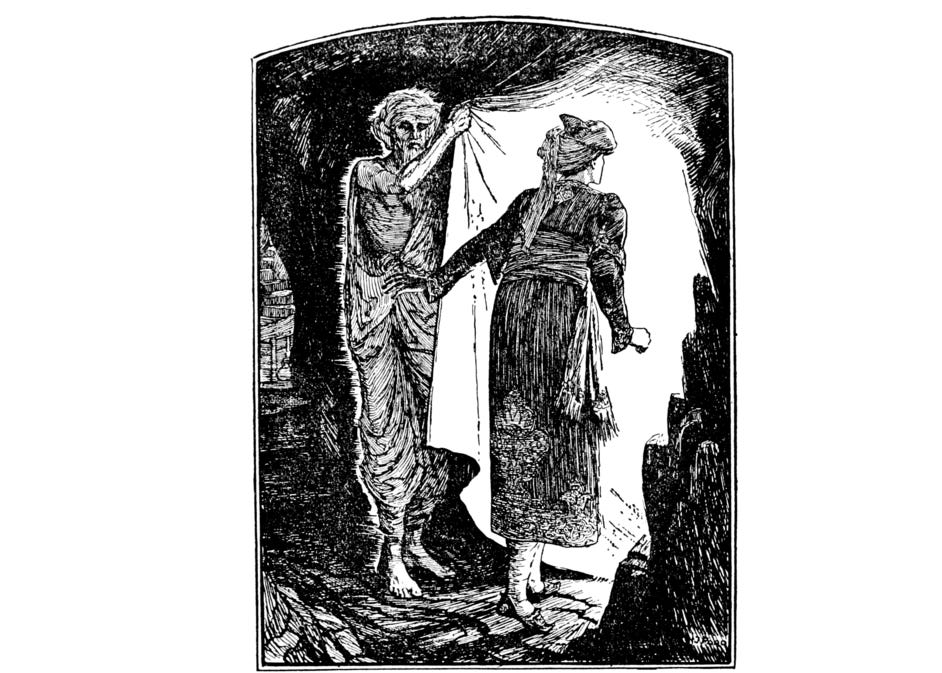
The arguments get very -- interesting when the wizards use knowledge that was certainly given to someone by a devil. On one hand, if the knowledge is clear, and the intent pure, what could be wrong? On the other hand, the devil was much more clever than any wizard, and could mean no good by it. How could it not lead to problems?
At the opposite extreme, what if it’s clearly all of human origin? Even if it’s the first dawning of magic-made-technology?3
Will that fix all the problems?
No, because when mankind has figured out natural things, the rather obvious tendency to evil magic is also a problem. Curses, blighting crops, bad weather, bewitching someone into doing as you wish whether falling love or losing a court case, divining people’s secrets and in a way that gave them no defense, and all the rest are the history of magic. Looking for treasure is on the innocuous side.
Even making a farm prosperous make people suspicious that you did it by stealing the prosperity of farms about it. (And how do you ensure that the magic did not do that? You’d need to know how it works.)
It, after all, is obvious that it is easier to work out how to break things than to fix them.
Religions may also, of course, regard things as impious that do not cause harm. Fortune-telling, for instance. An impious attempt to peer at the future. Sometimes prohibited absolutely. Sometimes prohibited outside consulting approved oracles, and thus trying to escape the legitimate constraints on it.
You have to actually develop your religion to determine what it decrees impious. Weather-workings offend the god of the sky, perhaps. (Or perhaps the Butterfly Effect is such that all those unnatural prodding of rainclouds and winds does actually produce extreme weather. Hard to pick out the difference.)
In reality, your religion, if organized, may actually help against witch-hunting by working out that certain things do not work.
The Inquisition historically convicted many accused witches of superstitious practice instead of witchcraft. Folklore maintained that witches could conjure up storms to wreck ships and ruin harvests. Superstition, said the Inquisitors. “All weather is good because all weather is God’s.”
Now, effectual magic may change this, because there is the tendency to regard unpleasant things as anomalies. Hence, a hailstorm causes a witchhunt for those responsible, but excellent weather needs no explanation.
If, in fact, the local wizard conjures the sunny weather to let the haying proceed without rain ruining the harvest -- at a reasonable price -- things will be clearer. Somewhat.
Mind you, cultures all around the world have the idea of the beneficent wizard at the same time as the evil one. A “witch doctor” is not a witch who is a doctor. It means the same as “cancer doctor”: someone whose specialty is treating witchery, and curing the bewitched.
Many cultures have the concept of this wizard being able to do both, as he chooses. There have certainly been cases where the person who diagnoses the victim as cursed was demonstrably the person who put the objects in place that inspired the victim to suspect a problem and seek help.
The notion that all wizards will innocuously ensure clear weather for the haying, and sufficient rains for the rest of the time, so that it’s pure malice to hate them, is unreasonably implausible. What are all these paragons? Why does wizardry turn people into them?
And would it even work?
Ursula K. LeGuin tells, in Wizard of Earthsea, rain clouds that are bounced all around an island until they finally can rain in peace on the sea, because Ogion, Ged’s master, is an unusual wizard in that he just lets it rain on him (and Ged, which Ged finds irksome). LeGuin treated it as a quirk, but even in my childhood, it occurred to me that the farmers would be less than happy with this, and even the wizards, once the water table ran out.
Even if you can contain the effects of your spell with no Butterfly Effect, there’s the question of whom you aid.
Some crops like more rain, some less.
Sometimes there are bandits, or armies, coming to attack your village, and the villages may want you to give them a thunderstorm in the pass to scare them off, or drown them in a flood, or hit them with lightning.
Sometimes there is a lawsuit over land, and the rich farmer claims the poor widow’s scrap, and she wants the wizard to blight the farmer’s lands with drought until he gives back the scrap. (And what if the widow really was in the wrong?)
Such conflicts do come up, and the wizards who try to judge sometimes will judge wrongly.
At that, they are in the position of the rich farmer, only very much more so. A wizard who controls the weather is a very powerful position, creating doubts about scruples.
And, in fact, probably creating reasonable doubts. Some wizards master the arts out of pure desire for knowledge, but their very desire may lead to unscrupulous use of them merely to see what happens. Others -- such a concentration of power into the hands of few seldom happens happily for the many, and all the more so in that the wizards’ power is not social at its base. A wizard does not need the good will of anyone to cast fireballs or send drought.
Worse, the wizards who wreak harm would be the most visible ones. A priest could utter many jeremiads without being more unjust than to not pause in his fulminations to carefully point out that the evil wizards are the problem. He could even name the ones he is attacking and so the others suffer only by association.
They might do something about that.
This might, in due order, lead to something like Randall Garnett’s Lord Darcy series, where they have means to evaluate character and scrupulously license wizards, and yet Too Many Magicians has one practicing black magic. In which the Church is deeply involved in the issuing of the licenses.
Would ensuring that the intent was beneficent, or at least innocent, fix things up? More reflections ahead.
I was reading a fantasy a while back, i think tradpubbed, where the author did not seem to understand why the poor, oppressed telepaths who can do jedi mind tricks and tamper with people's memories might be a shade unpopular with the authorities.