

World-Building And Reality
A reflection

One useful thing about reading manga when you know some European history is that it alerts you to the dangers of writing about a society not your own, and assumptions.
Many manga are placed in a Europeanized setting. A Ruritania,1 usually enough, which gives them some flexibility, but not so much as they take -- and take, I suspect, by accident.
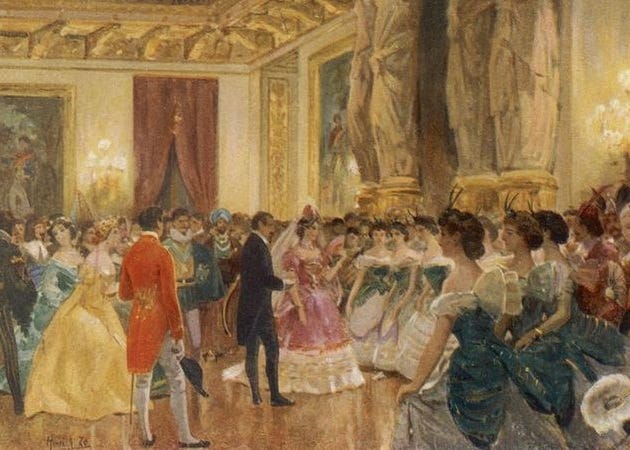
They are Ruritanias not only in that they are fictional countries in a European style, if not actually located, however vaguely, on the continent, but that they are involved in politics and courts in a vaguely nineteenth-century style.
Except --
Royal concubines.
King’s selecting their heirs.
Neither of these were things in the era. The closest thing you had to concubinage was morganatic marriage. This was better than concubinage in some respects -- it actually was a marriage -- and worse in others -- the children were excluded entirely from inheriting the title of the higher ranked parent, usually the father.
(Yes, it does mean “morning.” This is because in the Dark Ages, marriage among those with any property included negotiations about the “morning gift.” The morning after the wedding day, and night, the bridegroom would sign it over to the bride. How much control, if any, she had over it during the marriage, and whether she had the power to bequeath it by will, varied, but it was always hers to support her in widowhood. This was revived and altered to indicate a marriage in which the wife and children were entitled to only what was endowed.)
And, of course, kings were bound by the law. Unless their sons did something profoundly stupid, the throne descended through strict primogeniture. Sometimes excluding females, sometimes putting them after their brothers.2
Provided, of course, your father had married suitably. The era of morganatic marriage was one in which only marrying a member of a dynasty, whether a distant enough relative of your own or another dynasty, made the children dynasts. For most kingdoms.
Various German cousins of hers were scandalized that Queen Victoria considered the offspring of morganatic marriages suitable mates for British royalty, and wrote to tell her so. She wrote sharply back that she considered them suitable -- and who were they to gainsay her?
British law required only the approval of a monarch for the dynast’s marriage. Queen Victoria even allowed one to marry a subject.
True, these are Ruritanias and technically not even in Europe despite the consistent European iconography. Turning it a bit more of a mishmash, or even East Asian Ruritania, would help.
On the other hand, sometimes it is supposed to be a country. I tried one series purportedly taking place in Victorian Great Britain.
A nobleman adopted two boys out of an orphanage as his brothers. The contempt they were treated with radicalized him. He was enraged by how people were trapped in their social class.
I skipped the rest of the series.
Great Britain had no legal adoption at the time. Then, even now that there is, it does not affect noble titles and entailed property, and all other property can bestowed by a will, with the testator having complete freedom to do so.
Furthermore, it would have been completely clear for him to see to those boys. All he had to do was to arrange for them to attend a boarding school as scholarship students. For school breaks, he might arrange for them to stay in the country, at a foster family that were probably his tenants. He might even make them his wards. (There would be speculation that they were his half-brothers or otherwise -- connected to his family, but it might help their status.)
By this means, they would rise in the world.
There was, indeed, a lot of social rising in this era. Objectively, the Queen’s List handed out even titles to the commoners, ennobling them.3 At the opposite extreme, mandatory schooling for all children came in, leading to literacy, and sometimes social climbing as a consequence. Working class boys managed to attend universities from their educations in these schools.
Indeed, one member of Parliament complained that a successful German manufacturer would raise his son to be an even better manufacturer, where a British one would turn his son in a country gentleman.
And the lesson from this is -- develop your instinct for wondering whether you have merely copied what you are familiar with into a society where it doesn’t fit.4 Then, think about what you need to adjust, in the society or what you copied, to make them work.5
Haha, I've tried to read those, too! There's invariably details that pull me out. On webtoons it's just as bad.
> Many manga are placed in a Europeanized setting. A Ruritania, usually enough, which gives them some flexibility, but not so much as they take -- and take, I suspect, by accident.
To be fair, Western works tend to be even worse about assuming every other culture adheres to current year Western norms. And in general Westerners have a very hard time wrapping their heads around just how illiberal and inegalitarian traditional non-Western cultures were. Even medieval Europe was extremely liberal by global standards.